Table of Contents
1. Introduction
- The Paradise on Earth: Kashmir’s Natural Beauty
- The Call for Sustainable Tourism
- A Green Initiative: Tree Plantation Drive in the Valley
- What This Article Covers
2. Why Does Kashmir Have a Tree Plantation Drive?
- The Environmental Challenges of Kashmir
- Tourism’s Double-Edged Sword
- The Birth of the Tree Plantation Drive
- Collaborative Efforts: Government, Locals, and Tourists
3 .How to Promote Eco-Tourism in Jammu and Kashmir?
- What Is Eco-Tourism, and Why Does It Matter?
- Eco-Friendly Practices in Kashmir’s Tourism Sector
- The Role of the Tree Plantation Drive in Eco-Tourism
- Steps to Strengthen Eco-Tourism in the Region
4. Does Tourism Affect the Environment in Kashmir Valley?
- The Environmental Footprint of Tourism
- Balancing Economic Growth and Environmental Protection
- How the Tree Plantation Drive Addresses These Issues
- Case Studies: Success Stories and Lessons Learned
5. What Is Happening in Jammu and Kashmir’s Tourism Sector?
- Recent Developments in Kashmir’s Tourism Industry
- Stakeholders Driving Change
- Challenges and Opportunities
- The Road Ahead: Future Plans for Sustainable Tourism
6. Conclusion
- A Greener Future for Kashmir’s Tourism
- The Power of Collective Action
- Your Role in Promoting Eco-Tourism
7. FAQs
- Why is Kashmir focusing on eco-friendly tourism?
- How can tourists contribute to the tree plantation drive?
- What are the benefits of eco-tourism for local communities?
- Are there any eco-certified accommodations in Kashmir?
- How does the tree plantation drive help combat climate change?
1. Introduction
- Kashmir, often referred to as “Paradise on Earth,” is one of the most sought-after tourist destinations renowned for its breathtaking landscapes, lush valleys, and pristine lakes. However, with the rise in tourism, the region faces environmental challenges that threaten its natural beauty and ecosystem.
- In recent years, sustainable tourism and environmental conservation have gained prominence worldwide. Recognizing the importance of eco-friendly initiatives, Kashmir’s tourism sector has launched a tree plantation drive aimed at promoting environmental sustainability.
- Why is Kashmir focusing on eco-friendly tourism?
- How can tourists contribute to the tree plantation drive?
- What are the benefits of eco-tourism for local communities?
- Are there any eco-certified accommodations in Kashmir?
- How does the tree plantation drive help combat climate change?
2. Why Does Kashmir Have a Tree Plantation Drive?
Kashmir is grappling with several environmental issues, including deforestation, climate change, and pollution. These challenges have been exacerbated by increased tourist footfall, leading to a strain on natural resources and a decline in green cover.
While tourism is a major economic driver, it also contributes to ecological degradation through increased waste production, carbon emissions, and land encroachment. To counteract these negative effects, the tree plantation drive has been initiated with the following objectives:
- Restoring Green Cover: Replenishing forests and preserving biodiversity.
- Combating Climate Change: Reducing carbon footprints through afforestation efforts.
- Promoting Sustainable Tourism: Encouraging responsible travel and conservation efforts.
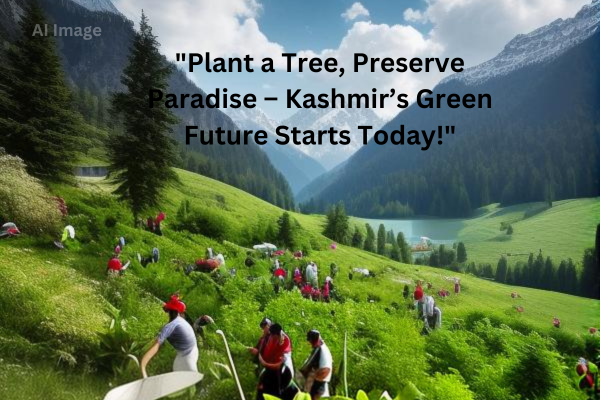
The drive is a collaborative effort involving the tourism sector, local communities, and government bodies, working together to make Kashmir a model for sustainable tourism
3. How to Promote Eco Tourism Jammu and Kashmir?
Tourism in Kashmir, while beneficial for the economy, has notable environmental consequences:
- Waste Generation: Tourists often leave behind plastic waste, contributing to pollution.
- Water Pollution: Lakes and rivers face contamination due to improper waste disposal.
- Strain on Natural Resources: Increased demand for water and energy leads to depletion.
The importance of balancing economic growth with environmental conservation cannot be overstated. The tree plantation drive is one such initiative aimed at mitigating these impacts. By increasing green cover, the region can offset carbon emissions, improve air quality, and maintain ecological balance.
Case studies from other eco-tourism destinations suggest that sustainable practices lead to long-term benefits for both tourism and the environment. If implemented effectively, Kashmir’s eco-tourism initiatives can set a precedent for other regions facing similar challenges.
4. Does Tourism Affect the Environment in Kashmir Valley?
Tourism in Kashmir, while beneficial for the economy, has notable environmental consequences:
- Waste Generation: Tourists often leave behind plastic waste, contributing to pollution.
- Water Pollution: Lakes and rivers face contamination due to improper waste disposal.
- Strain on Natural Resources: Increased demand for water and energy leads to depletion.
The importance of balancing economic growth with environmental conservation cannot be overstated. The tree plantation drive is one such initiative aimed at mitigating these impacts. By increasing green cover, the region can offset carbon emissions, improve air quality, and maintain ecological balance.
Case studies from other eco-tourism destinations suggest that sustainable practices lead to long-term benefits for both tourism and the environment. If implemented effectively, Kashmir’s eco-tourism initiatives can set a precedent for other regions facing similar challenges.
5. What Is Happening in Jammu and Kashmir’s Tourism Sector?
The tourism sector in Jammu and Kashmir is undergoing significant transformations, with a growing emphasis on sustainability. Recent developments include:
- Tree Plantation Drive: A flagship initiative to restore green spaces and combat environmental degradation.
- Government and Private Sector Collaboration: Joint efforts to promote eco-friendly tourism policies.
- Community Involvement: Encouraging local participation in conservation efforts and sustainable tourism activities.
Challenges such as inadequate waste management, lack of awareness, and the need for policy enforcement remain. However, with continued efforts, the region aims to establish a sustainable tourism model that balances economic growth with environmental protection.
Future plans include expanding eco-tourism projects, developing nature trails, and integrating green technology in tourism infrastructure.
Conclusion
Kashmir’s tree plantation drive is a crucial step toward promoting eco-friendly tourism. By restoring green cover and encouraging sustainable travel practices, this initiative sets a strong foundation for environmental conservation in the region.
Sustaining these efforts requires collaboration among government bodies, businesses, and tourists. Collective action is necessary to preserve Kashmir’s natural beauty while ensuring economic prosperity through tourism.
As responsible travelers, we can contribute by supporting eco-tourism initiatives, adopting sustainable practices, and spreading awareness about environmental conservation. Let’s work together to make Kashmir a beacon of sustainable tourism for future generations.
FAQs
1. Why is Kashmir focusing on eco-friendly tourism?
Kashmir is focusing on eco-friendly tourism to preserve its natural beauty and address environmental challenges like deforestation, pollution, and climate change. By promoting sustainable practices, the region aims to balance tourism growth with environmental conservation.
2. How can tourists contribute to the tree plantation drive?
Tourists can contribute by participating in tree plantation activities organized by local authorities or tourism operators. They can also support eco-friendly accommodations, reduce waste, and spread awareness about sustainable tourism.
3. What are the benefits of eco-tourism for local communities?
Eco-tourism creates job opportunities, supports local businesses, and encourages community involvement in conservation efforts. It also helps preserve cultural heritage and promotes environmental awareness among locals.
4. Are there any eco-certified accommodations in Kashmir?
Yes, several eco-friendly lodges and resorts in Kashmir are adopting sustainable practices, such as using renewable energy, managing waste responsibly, and supporting local communities. These accommodations often have eco-certifications to showcase their commitment to sustainability.
5. How does the tree plantation drive help combat climate change?
Yes, several eco-friendly lodges and resorts in Kashmir are adopting sustainable practices, such as using renewable energy, managing waste responsibly, and supporting local communities. These accommodations often have eco-certifications to showcase their commitment to sustainability.